9.9
CiteScore
7.1
Impact Factor
Yanting Wang, Mohammad Golam Mostofa, et al.
 doi: 10.1016/j.jgg.2025.12.001
Abstract (0) PDF (0)
Abstract:
Strigolactones (SLs) are a group of phytohormones that enhance hyphal branching of arbuscular mycorrhizal fungi (AMF), promote seed germination of parasitic plants, and influence plant growth, development, and stress acclimation. SLs improve plant stress resilience by modulating shoot and root architecture, photosynthesis, nutrient homeostasis, and antioxidant defense. Under nutrient deficiency, SL accumulation enhances AMF colonization and triggers the expression of genes related to the nutrient starvation response. When subjected to drought, SLs mitigate water loss by modulating stomatal density and closure, cell membrane integrity, and anthocyanin biosynthesis. SLs also mitigate salinity and heavy metal stresses by maintaining ion homeostasis, while conferring thermotolerance and enhancing chilling tolerance. In this review, we highlight recent advances in SLs and their mechanisms in plant responses to environmental stresses, including nutrient deficiencies, drought, salinity, extreme temperatures, metal toxicity, herbivore attack, and pathogen infection. We further discuss how SLs interact with other phytohormones to coordinate the physiological, biochemical, and molecular regulatory events critical for plant acclimation to abiotic and biotic stresses.
Xun Zhang, Jianjun Tao, et al.
 doi: 10.1016/j.jgg.2025.11.015
Abstract (7) PDF (2)
Abstract:
Ethylene, a pivotal gaseous phytohormone, regulates diverse processes in plant growth, development, and stress adaptation. In Arabidopsis, ethylene perception by endoplasmic reticulum (ER)-localized receptors initiates a canonical signaling cascade involving CONSTITUTIVE TRIPLE RESPONSE 1 (AtCTR1) and ETHYLENE INSENSITIVE 2 (AtEIN2). This pathway culminates in nuclear translocation of AtEIN2-CEND and activation of the transcription factor AtEIN3/EIN3-LIKE1 (AtEIL1). Rice employs conserved (OsEIN2, OsCTR2, OsEIL1/2) and unique (Mao Huzi 3 [MHZ3], MHZ11, MHZ1) components for ethylene signaling, reflecting adaptations to semi-aquatic environments. Ethylene regulates developmental processes including seed germination, apical hook formation, root architecture, flowering, and senescence, often via intricate crosstalk with auxin, abscisic acid (ABA), jasmonic acid (JA), gibberellins (GA), and brassinosteroids (BR). Ethylene signaling also influences rice yield-related traits such as grain filling, grain size, and starch biosynthesis. Moreover, ethylene modulates responses to abiotic stresses (such as submergence, hypoxia, salinity, drought, and temperature fluctuations) and nutrient imbalances. This review synthesizes current understanding of ethylene signaling and its functions, focusing on the model dicot Arabidopsis thaliana and the monocot rice (Oryza sativa). It highlights conserved and diverged mechanisms, underscoring ethylene’s potential as a target for enhancing crop resilience and productivity in changing environments.
Shuyang Zhong, Le Xu, et al.
 doi: 10.1016/j.jgg.2025.11.014
Abstract (3) PDF (0)
Abstract:
Stalk lodging is a major threat to global maize production, which causes great annual yield losses. Stalk bending strength (SBS) is highly associated with resistance to stalk lodging in maize. However, the genetic basis of SBS remains largely unknown. In this study, we identify a quantitative trait locus (QTL), stiff2, corresponding to a known flowering-time gene ZmCCT, by integrating QTL mapping and association mapping. A 5-kilobase (kb) transposable element inserted in the promoter region of ZmCCT significantly reduces SBS, while upregulated expression of ZmCCT through transformation significantly enhances SBS. Gene regulatory network analysis reveals that ZmCCT may indirectly regulate a set of downstream genes, which contain nrt5 for nitrogen transport, Tu1, d8, and d9 for stalk elongation, ub2, ub3, and ch1 for stalk thickening, and myb69 and bm4 for lignin biosynthesis. These genes collectively increase stalk strength and improve lodging resistance aboveground. Additionally, stiff2 regulates not only aboveground resistance to stalk bending and breakage but also influences root system architecture, which enhances resistance to root lodging belowground. The identification of stiff2 and its downstream targets provides critical insights into the genetic control of maize lodging and offers powerful tools for breeding lodging-resistant cultivars.
Fei Wang, Hanyu Wei, et al.
 doi: 10.1016/j.jgg.2025.11.013
Abstract (12) PDF (0)
Abstract:
Guangshuo Cao, Yi Shen, et al.
 doi: 10.1016/j.jgg.2025.11.012
Abstract (12) PDF (0)
Abstract:
Denghui Zhai, Xuebin Zhou, et al.
 doi: 10.1016/j.jgg.2025.11.011
Abstract (6) PDF (0)
Abstract:
Primary cilia, microtubule-based organelles widely existing on eukaryotic cells, play a critical, indispensable role in the development and functional maintenance of the central nervous system (CNS). Here, we summarize recent advances on the distribution of primary cilia across different regions of the CNS, providing a detailed map highlighting their presence on both neurons and glial cells. Furthermore, we elaborate on the roles of primary cilia in essential physiological functions, including progenitor cell proliferation, neurogenesis, neuronal migration, and synaptic connections within the CNS. We also discuss the emerging links between ciliary dysfunction and a range of CNS disorders, including cognitive impairment, metabolic disorders and hyperphagia-induced obesity, neurodegenerative diseases, and psychiatric conditions. Integrating existing findings, this review provides a panoramic perspective on ciliary roles in the CNS and lays a critical foundation for subsequent basic research, disease-mechanism studies, and therapeutic-target exploration.
MORE+
Special Issues
Call for Papers
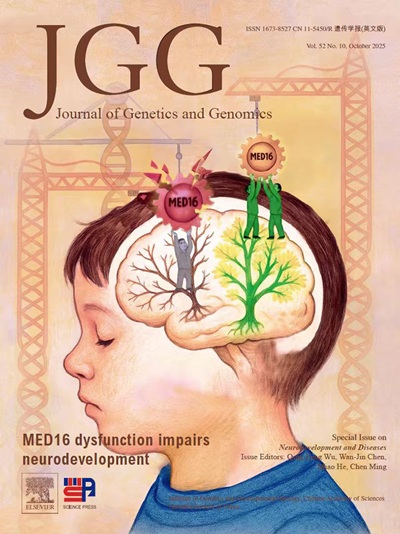
Neurodevelopment and Diseases

Edited by Dr. Qing-Feng Wu, Dr. Wan-Jin Chen, Dr. Miao He, Dr. Chen Ming

Pages 1155-1304 (October 2025)


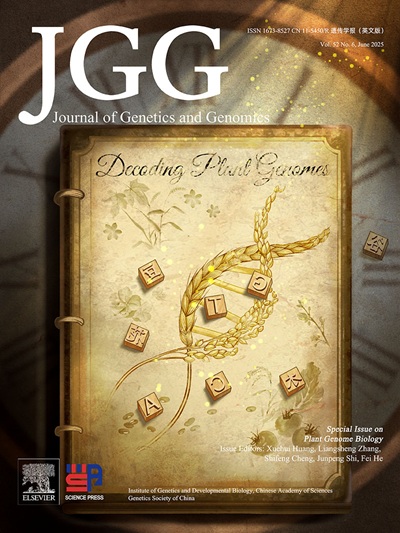
Plant Genome Biology

Edited by Prof. Xuehui Huang, Prof. Liangsheng Zhang, Prof. Shifeng Cheng, Associate Prof. Junpeng Shi, Prof. Fei He

Pages 719-868 (June 2025)

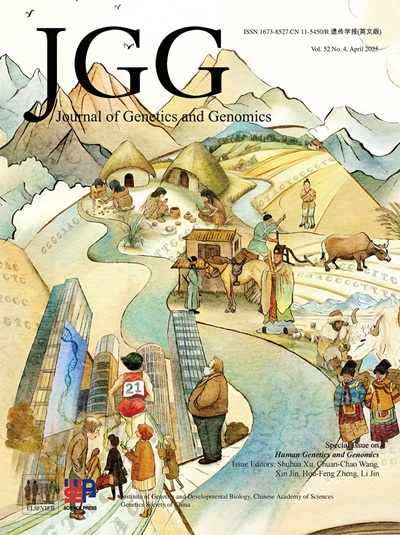
Human Genetics and Genomics

Edited by Prof. Shuhua Xu, Prof. Chuan-Chao Wang, Prof. Xin Jin, Prof. Hou-Feng Zheng, Prof. Li Jin

Pages 449-600 (April 2025)


MORE+