9.9
CiteScore
7.1
Impact Factor
Jie Ma, Yilin Li, et al.
 doi: 10.1016/j.jgg.2026.04.001
Abstract (4) PDF (0)
Abstract:
Saline-alkaline stress severely constrains rice productivity, posing a critical threat to global food security. Identifying uncharacterized salt-tolerance genes with agronomic value is therefore essential for breeding stress-resilient and high-yield rice varieties. In this study, we identify a previously unidentified gene, LOC_Os05g07260, by combining genome-wide association study (GWAS) and expression quantitative trait locus (eQTL) mapping, and designated it as Salt Tolerance Gene 5.2 (STG5.2), which encodes a phosphatidylinositol glycan-related protein. Functional validation reveals that STG5.2 acts as a positive regulator of both salt stress tolerance and yield-related traits in rice. STG5.2 may reprogram metabolic pathways and regulate the expression of salt-responsive genes including Na+ exclusion-related Salt Overly Sensitive 1 (OsSOS1), High-Affinity K+ Transporter 2;1 (OsHKT2;1), and stress tolerance-positive regulator Acireductone Dioxygenase 1 (OsARD1), forming a multi-layered regulatory network for salt adaptation. Combined with phenotypic data from chromosome segment substitution lines, the superior STG5.2 haplotype, predominantly present in indica rice, shows great potential for improving salt tolerance in japonica backgrounds. Overall, our results highlight that STG5.2 may modulates rice salinity resilience by regulating ion homeostasis and the coordination of multiple stress-responsive pathways, providing a potential molecular basis for salt-tolerant rice varieties breeding.
Yuke Zhou, Jinchen Ye, et al.
 doi: 10.1016/j.jgg.2026.04.002
Abstract (3) PDF (0)
Abstract:
Yuankang Cai, Qinglu Zhang, et al.
 doi: 10.1016/j.jgg.2026.03.025
Abstract (2) PDF (0)
Abstract:
Improving rice eating and cooking quality (ECQ) through designed breeding requires a precise understanding of functions and interactions of key gene haplotypes. Waxy and ALK are two major genes regulating ECQ, but how different combinations of their alleles interact to affect yield and quality traits remains largely unexplored. Here, we construct a set of 30 near-isogenic lines (NILs) from the elite cultivar Huanghuazhan, systematically combining six Waxy and five ALK alleles, including a recombinant-derived functional allele, ALKe, identified in this study. Under non-extreme high temperature conditions, Waxy is associated with grain yield primarily via seed setting rate and thousand-kernel weight in our NIL populations, whereas ALK has no significant effect on yield. Compared with the Wxb-ALKb combination, the Wxb-ALKe combination improves the ECQ without compromising yield. Starch structural analysis reveals that Waxy controls chalkiness and head rice yield (HRY) via apparent amylose content (AAC), whereas ALK affects chalkiness by altering amylopectin chain-length distribution. Notably, high temperature during grain filling intensifies chalkiness and reduces HRY, particularly in the ALKc lines. These findings provide genetic resources and facilitate the design breeding of rice varieties that meet diverse consumer preferences.
Ming-Ju Lyu, Faming Chen, et al.
 doi: 10.1016/j.jgg.2026.03.024
Abstract (4) PDF (0)
Abstract:
Photosynthesis fuels crop growth and yield, yet the regulatory networks coordinating photosynthetic gene expression with carbon allocation remain incompletely understood. Here, we construct a gene regulatory network (GRN) for rice photosynthesis by integrating time-resolved RNA-seq, ATAC-seq, and promoter cis-element analyses. We identify nine hub transcription factors (TFs), four of which (OsPIL13, OsbZIP72, OsCGA1, and OsGLK1) exhibit strong leaf-specific, light-inducible expression patterns. Overexpression of OsPIL13, OsbZIP72, or OsGLK1 using photosynthetic tissue-specific promoters significantly enhanced the light-saturated photosynthetic rate (Asat) across developmental stages, with OsPIL13 overexpression increasing Asat by up to 57% during grain filling. While several hub TFs boosted photosynthetic capacity, consistent improvements in biomass and grain yield under field conditions were rare. Notably, OsGLK1 overexpression confers stable yield gains across multiple growing seasons. Comparative transcriptomic analysis indicates that OsGLK1 also upregulates genes involved in brassinosteroid biosynthesis and sugar and lipid transporter genes, potentially linking photosynthetic output to growth and resource allocation. Collectively, our findings indicate that enhancing photosynthesis alone is insufficient to guarantee yield improvement; rather, the coordinated regulation of photosynthetic capacity and downstream carbon utilization is essential for sustainable productivity gains in rice.
Dan-Yang Wang, Yin-Wei Wang, et al.
 doi: 10.1016/j.jgg.2026.03.023
Abstract (8) PDF (0)
Abstract:
The gut microbiota is increasingly recognized as a regulator of reproductive health, yet its role in ovarian aging remains unclear. Here, we combine Mendelian randomization (MR) analysis with experimental validation to investigate the causal relationship between gut microbiota and ovarian aging. MR analysis identifies four microbial taxa significantly associated with age at natural menopause. In mouse models, germ-free mice exhibit accelerated ovarian functional decline, including reduced ovarian reserve and impaired folliculogenesis. Fecal microbiota transplantation (FMT) from young donors alleviates ovarian aging phenotypes, whereas FMT from aged donors exacerbates functional decline. Metagenomic analysis reveals species-level differences between young and ovarian-aging mice, with Parabacteroides johnsonii (P. johnsonii) enriched in young mice. Administration of P. johnsonii to middle-aged mice improves ovarian reserve, reduces follicular atresia, enhances granulosa cell proliferation, and decreases systemic inflammation. These findings highlight a causal role of the gut microbiota in ovarian aging and support microbiota-targeted interventions as a potential strategy to preserve ovarian function.
Jin-Dong Wang, Li-Jun Kan, et al.
 doi: 10.1016/j.jgg.2026.03.022
Abstract (18) PDF (0)
Abstract:
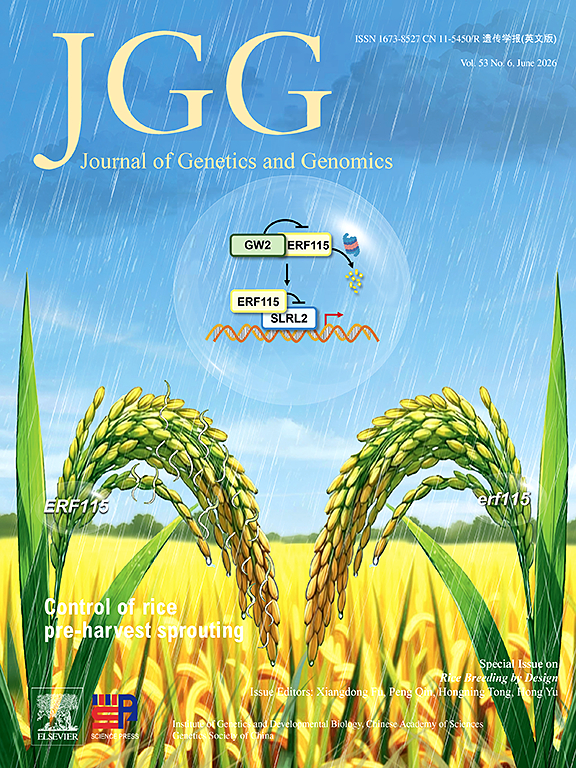
Pre-harvest sprouting (PHS), caused by weak seed dormancy and environmental stimuli, leads to significant losses in both crop yield and grain quality. Breeding crop cultivars with enhanced PHS resistance represents a promising strategy to address this challenge. However, limited useful genetic resources has hindered the progress in rice molecular breeding. Through screening of a rice mutant library, we identify the ethylene response factor115 (erf115) mutant, which exhibits enhanced PHS resistance. Genetic analysis reveals that ERF115 functions as a negative regulator of seed dormancy. Mechanistic assays show that the E3 ubiquitin-protein ligase Grain Width and Weight 2 (GW2) interacts with and ubiquitinates ERF115, thereby promoting its proteasomal degradation. Accordingly, gw2 mutants display increased PHS susceptibility. ERF115 also interacts with the transcription factor SLR1-like 2 (SLRL2) and represses its transcriptional activation activity, consequently reducing the expression of the dormancy gene Mother of FT and TFL1 like 2 (MFT2). Haplotype analysis identifies three major ERF115 haplotypes (HapI–HapIII), among which ERF115HapI represents an elite allele associated with reduced PHS. Collectively, our findings reveal a GW2–ERF115–SLRL2 regulatory module that integrates ubiquitin-mediated regulation and hormone signaling to fine-tune rice seed dormancy, providing valuable genetic resources for breeding PHS-resistant rice varieties.
MORE+
Special Issues
Call for Papers
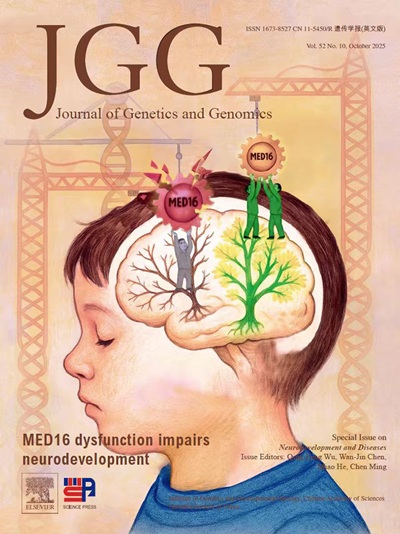
Neurodevelopment and Diseases

Edited by Dr. Qing-Feng Wu, Dr. Wan-Jin Chen, Dr. Miao He, Dr. Chen Ming

Pages 1155-1304 (October 2025)


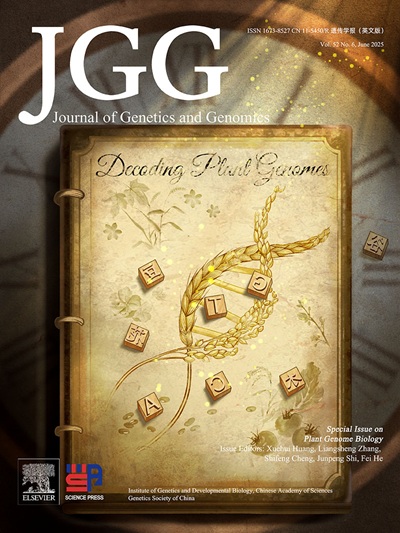
Plant Genome Biology

Edited by Prof. Xuehui Huang, Prof. Liangsheng Zhang, Prof. Shifeng Cheng, Associate Prof. Junpeng Shi, Prof. Fei He

Pages 719-868 (June 2025)

Human Genetics and Genomics

Edited by Prof. Shuhua Xu, Prof. Chuan-Chao Wang, Prof. Xin Jin, Prof. Hou-Feng Zheng, Prof. Li Jin

Pages 449-600 (April 2025)


MORE+