9.9
CiteScore
7.1
Impact Factor

2026 Vol. 53, No. 1

Review
Harness the wild: progress and perspectives in wheat genetic improvement
Xiubin Tian, Ziyu Wang, Wenxuan Liu, Yusheng Zhao
2026, 53(1): 1-15. doi: 10.1016/j.jgg.2025.05.010
Abstract:
Bread wheat (Triticum aestivum L.) is a staple hexaploid crop with numerous wild relatives. However, domestication and modern breeding have significantly narrowed its genetic diversity, diminishing its capacity to adapt to climate change. Wild relatives of wheat serve as a vital reservoir of genetic diversity, offering traits that enhance its resistance to various biotic and abiotic stresses. Over recent decades, remarkable progress has been made in utilizing superior genes from wild relatives to bolster wheat's defenses against diseases and pests, though the exploration of genes conferring abiotic stress tolerance has lagged behind. In this review, we summarize key advancements in the utilization of wild relatives for wheat enhancement over the past century, emphasizing both theoretical and technological innovations. Furthermore, we evaluate the potential contributions of wild relatives to address production challenges posed by climate change. We also explore strategies for isolating superior genes and developing pre-breeding germplasm to support the future development of climate-resilient wheat varieties.
Deciphering the genetic regulation of flowering time in rapeseed for early-maturation breeding
Minghao Zhang, Wei Chang, Ruicheng Hu, Yuxuan Ruan, Xiaodong Li, Yonghai Fan, Boyu Meng, Shengting Li, Mingchao Qian, Yuling Chen, Yuanyi Mao, Daifei Song, Haikun Yang, Luxiang Niu, Guangyuan Cao, Zhixia Deng, Zhixuan Qin, Hui Wang, Kun Lu
2026, 53(1): 16-27. doi: 10.1016/j.jgg.2025.08.011
Abstract:
Flowering time is a critical agronomic trait with a profound effect on the productivity and adaptability of rapeseed (Brassica napus L.). Strategically advancing flowering time can reduce the risk of yield losses due to extreme climatic conditions and facilitate the cultivation of subsequent crops on the same land, thereby enhancing overall agricultural efficiency. In this review, we synthesize current information on flowering time regulation in rapeseed through an integrated analysis of its genetic, hormonal, and environmental dimensions, emphasizing their crosstalk and implications for yield. We consolidate multi-omics evidence from population genetics, functional genomics, and systems biology to create a haplotype-based framework that overcomes the trade-off between flowering time and yield, providing support for the precision breeding of early-maturing cultivars. The insights presented here could inform future research on flowering time regulation and guide strategies for increasing rapeseed productivity.
Method
Unveiling cell-type-specific mode of evolution in comparative single-cell expression data
Tian Qin, Hongjiu Zhang, Zhengting Zou
2026, 53(1): 28-42. doi: 10.1016/j.jgg.2025.04.022
Abstract (0) PDF (0)
Abstract:
While methodology for determining the mode of evolution in coding sequences has been well established, evaluation of adaptation events in emerging types of phenotype data needs further development. Here, we propose an analysis framework (expression variance decomposition, EVaDe) for comparative single-cell expression data based on phenotypic evolution theory. After decomposing the gene expression variance into separate components, we use two strategies to identify genes exhibiting large between-taxon expression divergence and small within-cell-type expression noise in certain cell types, attributing this pattern to putative adaptive evolution. In a dataset of primate prefrontal cortex, we find that such human-specific key genes enrich with neurodevelopment-related functions, while most other genes exhibit neutral evolution patterns. Specific neuron types are found to harbor more of these key genes than other cell types, thus likely to have experienced more extensive adaptation. Reassuringly, at the molecular sequence level, the key genes are significantly associated with the rapidly evolving conserved non-coding elements. An additional case analysis comparing the naked mole-rat (NMR) with the mouse suggests that innate-immunity-related genes and cell types have undergone putative expression adaptation in NMR. Overall, the EVaDe framework may effectively probe adaptive evolution mode in single-cell expression data.
RiboParser/RiboShiny: an integrated platform for comprehensive analysis and visualization of Ribo-seq data
Shuchao Ren, Yinan Li, Zhipeng Zhou
2026, 53(1): 43-57. doi: 10.1016/j.jgg.2025.04.010
Abstract:
Translation is a crucial step in gene expression. Over the past decade, the development and application of ribosome profiling (Ribo-seq) have significantly advanced our understanding of translational regulation in vivo. However, the analysis and visualization of Ribo-seq data remain challenging. Despite the availability of various analytical pipelines, improvements in comprehensiveness, accuracy, and user-friendliness are still necessary. In this study, we develop RiboParser/RiboShiny, a robust framework for analyzing and visualizing Ribo-seq data. Building on published methods, we optimize ribosome structure-based and start/stop-based models to improve the accuracy and stability of P-site detection, even in species with a high proportion of leaderless transcripts. Leveraging these improvements, RiboParser offers comprehensive analyses, including quality control, gene-level analysis, codon-level analysis, and the analysis of Ribo-seq variants. Meanwhile, RiboShiny provides a user-friendly and adaptable platform for data visualization, facilitating deeper insights into the translational landscape. Furthermore, the integration of standardized genome annotation renders our platform universally applicable to various organisms with sequenced genomes. This framework has the potential to significantly improve the precision and efficiency of Ribo-seq data interpretation, thereby deepening our understanding of translational regulation.
Original Research
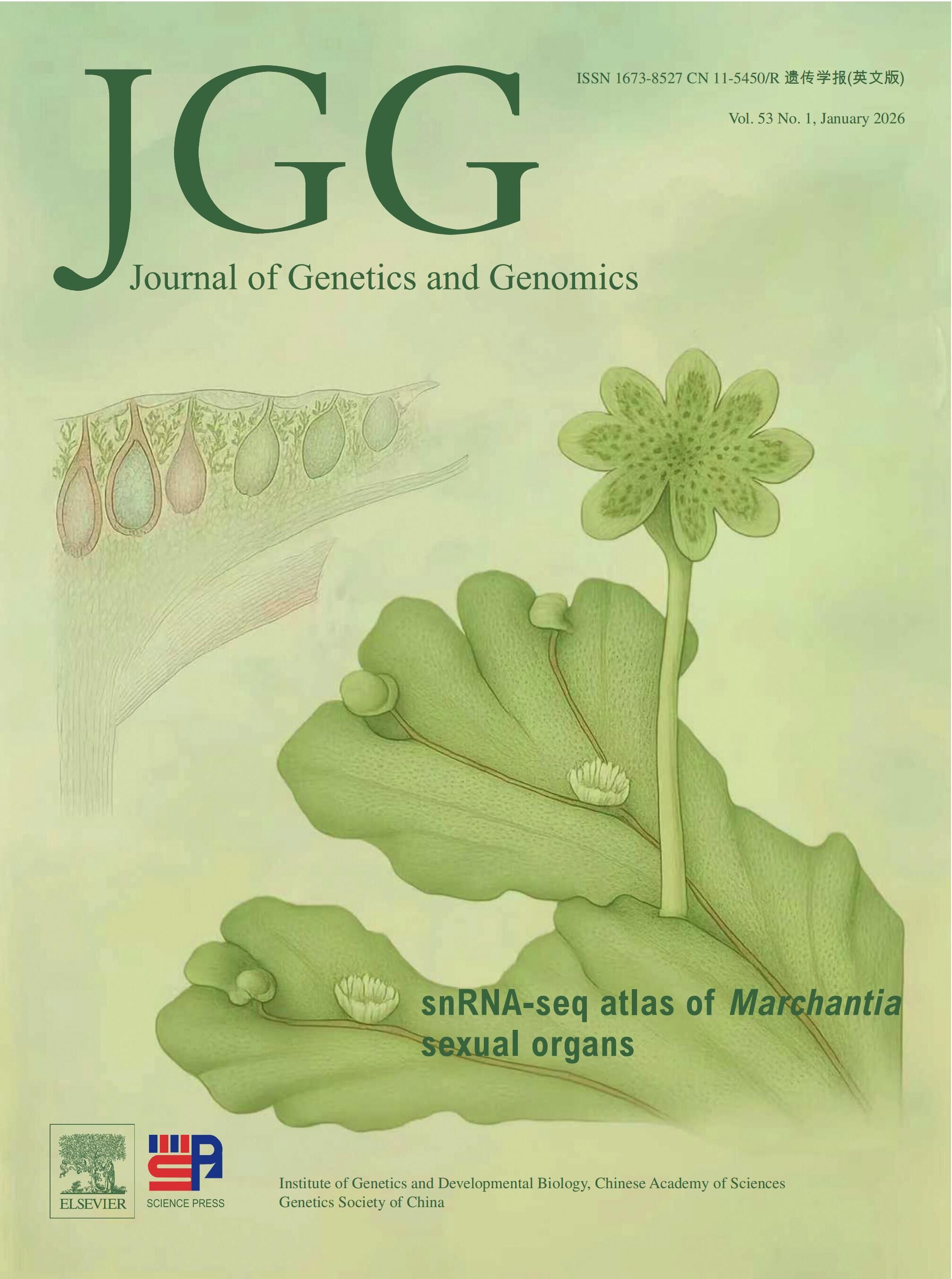
Transcriptomic landscape of Marchantia polymorpha sexual organs at single-nucleus resolution
Yuying Zeng, Yuqing Cai, Zhencheng Tu, Jingyi Liao, Xiayi Chen, Xing Guo, Sibo Wang, Linzhou Li, Yan Xu, Shanshan Dong, Huanming Yang, Tong Wei, Yang Liu
2026, 53(1): 58-74. doi: 10.1016/j.jgg.2025.11.002
Abstract:
Marchantia polymorpha, a model liverwort, provides a valuable system for investigating the evolution of plant sexual reproduction. To explore the cellular landscape of its reproductive structures, we generate a single-nucleus transcriptomic atlas of the antheridiophore, archegoniophore, and sporophyte. Using single-nucleus RNA sequencing (snRNA-seq), we capture over 30,000 high-quality nuclei and identify distinct cell populations. In the male organ, we characterize stages of spermatogenesis from early antheridium cells to mature sperm, revealing dynamic transcriptional programs including cell cycle regulation, chromatin remodeling, and calcium signaling. In the female organ, we define cell types including archegonial layers and secondary central cells. Sporophyte clusters are annotated as spores, elaters, capsule wall, foot, and seta cells, with transcriptional signatures related to structural support, stress response, and reproductive functions. Cross-species analysis indicates that capsule wall cells in liverworts are similar to tapetum cells. Notably, foot cells exhibit high expression of genes involved in sporopollenin biosynthesis and signaling pathways, serving as a central hub that mediates communication between the maternal gametophyte and the developing sporophyte. This study provides a comprehensive cellular and molecular map of M. polymorpha reproductive organs and sporophyte, establishing a framework for investigating the development and evolution of sexual reproduction in early land plants.

Single-cell transcriptome analysis reveals critical causative candidates for Down syndrome-related lung diseases
Chunchun Zhi, Xucong Shi, Siqi Chen, Zhaowei Cai, Xiaoling Jiang
2026, 53(1): 75-86. doi: 10.1016/j.jgg.2025.05.009
Abstract:
Down syndrome (DS) is caused by an extra copy of chromosome 21 (Hsa21). Children with DS have an increased frequency of respiratory tract infections, impaired alveolar and vascular development, and pulmonary hypertension. How trisomy 21 causes lung diseases remains poorly understood. In this study, we use the Dp16 mouse model, which contains a segmental chromosomal duplication of the entire Hsa21 syntenic region on mouse chromosome 16, to explore the gene dosage effects on DS-related lung diseases. The Dp16 mice present impaired alveolar development and inflammatory-like pathological changes. Single-cell RNA sequencing (scRNA-seq) analysis highlights increased APP-related interactions among male Dp16 lung cells. Specifically, altered antigen processing and presentation with increased MHC-II signaling are found in Dp16 immune cells. Reduced angiogenesis and altered inflammatory responses of Dp16 endothelial cells are also suggested. Moreover, scRNA-seq indicates hyperplasia of Dp16 vascular smooth muscle cells, which is validated by tissue immunofluorescence assessment. Transthoracic echocardiography further shows the existence of pulmonary hypertension in young Dp16 mice. Independent scRNA-seq analysis of the female lung cells recapitulates the majority of key findings identified in male mice, confirming the reproducibility of the results. Collectively, our results provide important clues for the further development of therapeutic approaches for DS-related lung diseases.
High efficiency of thalassemia prevention by next-generation sequencing: a real-world cohort study in two centers of China
Jinman Zhang, Wenqian Zhang, Haoqing Zhang, Aiqi Cai, Caiyun Li, Ling Liu, Jufang Tan, Yang Yang, Wen Yuan, Jing He, Shiping Chen, Yingli Cao, Yan Zhang, Jie Zhang, Rui Zhou, Shuai Hou, Dongqun Huang, Danjing Chen, Zhiyu Peng, Dongzhu Lei, Baosheng Zhu
2026, 53(1): 87-96. doi: 10.1016/j.jgg.2025.04.018
Abstract (33) PDF (1)
Abstract:
The occurrence of severe thalassemia, an inherited blood disorder that is either blood-transfusion-dependent or fatal, can be mitigated through carrier screening. Here, we aim to evaluate the effectiveness and outcomes of pre-conceptional and early pregnancy screening initiatives for severe thalassemia prevention in a diverse population of 28,043 women. Using next-generation sequencing (NGS), we identify 4,226 (15.07%) thalassemia carriers across 29 ethnic groups and categorize them into high- (0.75%), low- (25.86%), and unknown-risk (69.19%) groups based on their spouses’ screening results. Post-screening follow-up reveals 59 fetuses with severe thalassemia exclusively in high-risk couples, underscoring the efficacy of risk classification. Among 25,053 live births over 6 months of age, two severe thalassemia infants were born to unknown-risk couples, which was attributed to incomplete screening and late NGS-based testing for a rare variant. Notably, 64 rare variants are identified in 287 individuals, highlighting the genetic heterogeneity of thalassemia. We also observe that migrant flow significantly impacts carrier rates, with 93.90% of migrants to Chenzhou originating from high-prevalence regions in southern China. Our study demonstrates that NGS-based screening during pre-conception and early pregnancy is effective for severe thalassemia prevention, emphasizing the need for continuous screening efforts in areas with high and underestimated prevalence.
GCH1 contributes to high-altitude adaptation in Tibetans by regulating blood nitric oxide
Yongbo Guo, Wangshan Zheng, Tian Yue, Baimakangzhuo, Xuebin Qi, Kai Liu, Liya Li, Yaoxi He, Bing Su
2026, 53(1): 97-109. doi: 10.1016/j.jgg.2025.04.005
Abstract:
Nitric oxide (NO) is a key vasodilator that regulates vascular pressure and blood flow. Tibetans have developed a “blunted” mechanism for regulating NO levels at high altitude, with GTP cyclohydrolase 1 (GCH1) identified as a key candidate gene. Here, we present comprehensive genetic and functional analyses of GCH1, which exhibits strong Darwinian positive selection in Tibetans. We show that Tibetan-enriched GCH1 variants down-regulate its expression in the blood of Tibetans. Based on this observation, we generate the heterozygous Gch1 knockout (Gch1+/) mouse model to simulate its downregulation in Tibetans. We find that under prolonged hypoxia, the Gch1+/ mice have relatively higher blood NO and blood oxygen saturation levels compared with the wild-type (WT) controls, providing better oxygen supplies to the cardiovascular and pulmonary systems. Markedly, hypoxia-induced cardiac hypertrophy and pulmonary remodeling are significantly attenuated in the Gch1+/ mice compared with the WT controls, likely due to the adaptive changes in molecular regulations related to metabolism, inflammation, circadian rhythm, extracellular matrix, and oxidative stress. This study sheds light on the role of GCH1 in regulating blood NO, contributing to the physiological adaptation of the cardiovascular and pulmonary systems in Tibetans at high altitude.
Oncogenic Ras, Yki and Notch signals converge to confer clone competitiveness through Upd2
Ying Wang, Rui Huang, Minfeng Deng, Jingjing He, Mingxi Deng, Toyotaka Ishibashi, Cong Yu, Zongzhao Zhai, Yan Yan
2026, 53(1): 110-120. doi: 10.1016/j.jgg.2025.04.017
Abstract:
Cell competition is an evolutionarily ancient mechanism that functions to remove unfit or dangerous clonal cells in a multicellular community. A classical model is the removal of polarity-deficient clones, such as the precancerous scribble (scrib) mutant clones, in Drosophila imaginal discs. The activation of Ras, Yki, or Notch signaling robustly reverses the scrib mutant clonal fate from elimination to tumorous growth. Whether these signals converge to adopt a common mechanism to overcome the elimination pressure posed by cell competition remains unclear. Using single-cell transcriptomics, we find that a critical converging point downstream of Ras, Yki, and Notch signals is the upregulation of Upd2, an IL-6 family cytokine. Overexpression of Upd2 is sufficient to rescue the scrib mutant clones from elimination. Depletion of Upd2 blocks the growth of the scrib mutant clones with active Ras, Yki, and Notch signals. Moreover, Upd2 overexpression promotes robust intestinal stem cell (ISC) proliferation, while Upd2 is intrinsically required in ISCs for the growth of the adult intestine. Together, these results identify Upd2 as a crucial cell fitness factor that sustains tissue growth but can potentiate tumorigenesis when deregulated.
DNA methylation landscapes of in vitro matured oocytes retrieved during endoscopic gynaecological procedures
Cui-Ling Lu, Xue-Ling Song, Xiao-Ying Zheng, Tian-Shu Song, Xiao-Na Wang, Jie Yan, Rui Yang, Rong Li, Jie Qiao
2026, 53(1): 121-130. doi: 10.1016/j.jgg.2025.05.002
Abstract:
In vitro maturation (IVM) of human oocytes offers cost efficiency and minimal invasiveness, serving as a valuable supplementary tool in assisted reproduction for fertility preservation, ovarian hyperstimulation syndrome prevention, and other reproductive strategies. Despite its availability for three decades, the clinical use of IVM remains limited due to efficacy and safety concerns. This study examines the DNA methylation profile of IVM oocytes collected during laparoscopic/hysteroscopic surgeries compared to in vivo matured oocytes via reduced representation bisulfite sequencing. Results indicate IVM oocytes exhibit a higher global methylation level. Differentially methylated regions (DMRs) analysis reveals that the in vitro group displays more hypermethylated and fewer hypomethylated DMRs compared to the in vivo group. Additionally, the in vitro group exhibits a higher level of non-CpG methylation than the in vivo group. However, no significant correlation between methylation levels and transcriptional activity in these oocytes is found, especially for those specific imprinted genes or genes related to embryonic development. These findings shed light on the epigenetic landscape of IVM oocytes, contributing to the ongoing assessment of their clinical feasibility and safety in assisted reproduction.
Rhpn2 regulates the development and function of vestibular sensory hair cells through the RhoA signaling in zebrafish
Yubei Dai, Qianqian Li, Jiaju Deng, Sihang Wu, Guiyi Zhang, Yuebo Hu, Yuqian Shen, Dong Liu, Han Wu, Jie Gong
2026, 53(1): 131-142. doi: 10.1016/j.jgg.2025.04.006
Abstract:
Hearing and balance disorders are significant health issues primarily caused by developmental defects or the irreversible loss of sensory hair cells (HCs). Identifying the underlying genes involved in the morphogenesis and development of HCs is crucial. Our current study highlights rhpn2, a member of rho-binding proteins, as essential for vestibular HC development. The rhpn2 gene is highly expressed in the crista and macula HCs. Loss of rhpn2 function in zebrafish reduces the otic vesicle area and vestibular HC number, accompanied by vestibular dysfunction. Shorter stereocilia and compromised mechanotransduction channel function are found in the crista HCs of rhpn2 mutants. Transcriptome RNA sequencing analysis predicts the potential interaction of rhpn2 with rhoab. Furthermore, co-immunoprecipitation confirms that Rhpn2 directly binds to RhoA, validating the interaction of the two proteins. rhpn2 knockout leads to a decreased expression of rock2b, a canonical RhoA signaling pathway gene. Treatment with the RhoA activator or exogenous rock2b mRNA injection mitigates crista HC stereocilia defects in rhpn2 mutants. This study uncovers the role of rhpn2 in vestibular HC development and stereocilia formation via mediating the RhoA signaling pathway, providing a target for the treatment of balance disorders.
Two-pore-domain potassium channel Sandman regulates intestinal stem cell homeostasis and tumorigenesis in Drosophila melanogaster
Chen Zheng, Jiadong Zheng, Xin Wang, Yue Zhang, Xianjue Ma, Li He
2026, 53(1): 143-153. doi: 10.1016/j.jgg.2025.05.003
Abstract:
Potassium channels regulate diverse biological processes, ranging from cell proliferation to immune responses. However, the functions of potassium homeostasis and its regulatory mechanisms in adult stem cells and tumors remain poorly characterized. Here, we identify Sandman (Sand), a two-pore-domain potassium channel in Drosophila melanogaster, as an essential regulator for the proliferation of intestinal stem cells and malignant tumors, while dispensable for the normal development processes. Mechanistically, loss of sand elevates intracellular K+ concentration, leading to growth inhibition. This phenotype is rescued by pharmacological reduction of intracellular K+ levels using the K+ ionophore. Conversely, overexpression of sand triggers stem cell death in most regions of the midgut, inhibits tumor growth, and induces a Notch loss-of-function phenotype in the posterior midgut. These effects are mediated predominantly via the induction of endoplasmic reticulum (ER) stress, as demonstrated by the complete rescue of phenotypes through the co-expression of Ire1 or Xbp1s. Additionally, human homologues of Sand demonstrated similar ER stress-inducing capabilities, suggesting an evolutionarily conserved relationship between this channel and ER stress. Together, our findings identify Sand as a shared regulatory node that governs Drosophila adult stem cell dynamics and tumorigenesis through bioelectric homeostasis, and reveal a link between the two-pore potassium channel and ER stress signaling.
Regulation of maize kernel development via divergent activation of α-zein genes by transcription factors O11, O2, and PBF1
Runmiao Tian, Zeyuan Yang, Ruihua Yang, Sihao Wang, Qingwen Shen, Guifeng Wang, Hongqiu Wang, Qingqian Zhou, Jihua Tang, Zhiyuan Fu
2026, 53(1): 154-162. doi: 10.1016/j.jgg.2025.04.008
Abstract:
α-Zeins, the major maize endosperm storage proteins, are transcriptionally regulated by Opaque2 (O2) and prolamin-box-binding factor 1 (PBF1), with Opaque11 (O11) functioning upstream of them. However, whether O11 directly binds to α-zein genes and its regulatory interactions with O2 and PBF1 remain unclear. Using the small-kernel mutant sw1, which exhibits decreased 19-kDa and increased 22-kDa α-zein, we positionally clone O11 and find it directly binds to G-box/E-box motifs. O11 activates 19-kDa α-zein transcription, stronger than PBF1 but weaker than O2. Notably, PBF1 competitively binds to an overlapping E-box/P-box motif, and represses O11-mediated transactivation. Although O11 does not physically interact with O2, it participates in the O2-centered hierarchical network to enhance α-zein expression. sw1 o2 and sw1 pbf1 double mutants exhibit smaller, more opaque kernels with further reduced 19-kDa and 22-kDa α-zeins compared to the single mutants, suggesting distinct regulatory effects of these transcription factors on 19-kDa and 22-kDa α-zein genes. Promoter motif analysis suggests that O11, PBF1, and O2 directly regulate 19-kDa α-zein genes, while O11 indirectly controls 22-kDa α-zein genes via O2 and PBF1 modulation. These findings identify the unique and coordinated roles of O11, O2, and PBF1 in regulating α-zein genes and kernel development.
Decoding the complexity of coding and non-coding RNAs across maize anther development at the isoform level
Ge Yan, Xuxu Ma, Wei Huang, Chunyu Wang, Yingjia Han, Shufang Wang, Han Liu, Mei Zhang
2026, 53(1): 163-176. doi: 10.1016/j.jgg.2025.05.005
Abstract (0) PDF (0)
Abstract:
Anther is a key male reproductive organ that is essential for the plant life cycle, from the sporophyte to the gametophyte generation. To explore the isoform-level transcriptional landscape of developing anthers in maize (Zea mays L.), we analyzed Iso-Seq data from anthers collected at 10 developmental stages, together with strand-specific RNA-seq, CAGE-seq, and PAS-seq data. Of the 152,026 high-confidence full-length isoforms identified, 68.8% have not been described; these include 22,365 isoforms that originate from previously unannotated loci and 82,167 novel isoforms that originate from annotated protein-coding genes. Using our newly developed strategy to detect dynamic expression patterns of isoforms, we identify 13,899 differentially variable regions (DVRs); surprisingly, 1275 genes contain more than two DVRs, revealing highly efficient utilization of limited genic regions. We identify 7876 long non-coding RNAs (lncRNAs) from 4098 loci, most of which were preferentially expressed during cell differentiation and meiosis. We also detected 371 long-range interactions involving intergenic lncRNAs (lincRNAs); interestingly, 243 were lincRNA–gene ones, and the interacting genes were highly expressed in anthers, suggesting that many potential lncRNA regulators of key genes are required for anther development. This study provides valuable resources and fundamental information for studying the essential transcripts of key genes during anther development.
Research Communications
The nucleoporin CPR5 and histone chaperone NAP1 form a complex to negatively modulate plant immunity
Fenghui Xu, Xinyi Cai, Yi Yang, Yuehui Zhang, Weiyi Dou, Leiwen Pan, Shui Wang
2026, 53(1): 177-180. doi: 10.1016/j.jgg.2025.06.002
Abstract (197)
Abstract: