11.7
CiteScore
7.9
Impact Factor

Current Issue

2026 Vol. 53, No. 8

Review
Natural history and phenotype–genotype correlations in GJB2-related hearing loss: a systematic and comprehensive review
Liheng Chen, Cheng Wen, Weitao Li, Bowen Zhang, Chong Cui, Sha Yu, Cheng Ye, Wei Li, Yu Lu, Huanhai Liu, Huawei Li, Huijun Yuan, Qin Wang, Yilai Shu
2026, 53(8): 1345-1362. doi: 10.1016/j.jgg.2026.02.006
Abstract (242)
Abstract:
GJB2-related hearing loss is the most common type of hereditary hearing loss worldwide. However, its complex inheritance patterns, diverse phenotypic manifestations, and population-specific variant spectrum present significant challenges for both clinical practice and research. This review synthesizes evidence from 215 studies (7142 individuals) to quantitatively analyze the natural history and genotype-phenotype correlations across different inheritance patterns, including recessive, dominant, and digenic forms. Among V37I, the V37I/NT genotype is associated with a high proportion of mild-to-moderate hearing loss (84.15%), and the V37I/T genotype shows a flatter configuration than V37I/V37I. An analysis of 178 syndromic cases reveals complex phenotypes involving both the skin and auditory system, characterized by early-onset and severe hearing loss, with clear genotype-phenotype correlations for specific variants. We also summarize genomic and epigenetic mechanisms contributing to phenotypic severity. With a focus on clinical translation, we review the trajectory of GJB2 gene therapy research, from foundational animal studies to innovative therapeutic strategies approaching clinical application. By evaluating the natural history and genotype-specific auditory profiles, this work provides a practical evidence base to guide prognosis, genetic counseling, and crucially, the design of upcoming clinical trials, including patient selection and efficacy assessment. This review is registered with PROSPERO (CRD420251243620).
UFMylation: biological mechanisms, functions, and clinical implications
Xiaoyue Wu, Quan Yuan, Qi Yin
2026, 53(8): 1363-1381. doi: 10.1016/j.jgg.2026.02.014
Abstract:
Over the past two decades, UFMylation, a crucial post-translational modification mediated by a canonical E1-E2-E3 enzymatic cascade and specific deUFMylation enzymes, has emerged as an essential component for maintaining cellular homeostasis. It plays indispensable regulatory roles in fundamental processes, including protein quality control, genome stability maintenance, cell fate determination, and modulation of immune responses. These functions are achieved by precisely regulating key protein substrates and their associated signaling pathways. Consequently, dysregulation of these UFMylation-regulated processes directly drives the pathogenesis of a broad spectrum of human diseases. This review summarizes current insights into the UFMylation machinery, its enzymatic cascade, and related fundamental cellular processes. We systematically explain the molecular mechanisms by which UFMylation regulates cellular functions and discuss how its dysfunction contributes to the pathogenesis of a wide range of human diseases, including cancers, skeletal dysplasias, hematological disorders, nervous system disorders, metabolic-associated liver disease, silicosis, and cardiovascular diseases. Deciphering the precise molecular mechanisms underlying these pathologies is crucial for identifying diagnostic biomarkers and developing targeted therapeutic strategies. Furthermore, we highlight future perspectives on targeting the UFMylation system for therapeutic intervention in these diseases.

Plant cell wall signaling: from perception to adaptive responses
Mingtao Wang, Zhihui Li, Minyuan Ran, Yanqing Han, Xin Liu, Chunzhao Zhao
2026, 53(8): 1382-1400. doi: 10.1016/j.jgg.2026.02.005
Abstract (185)
Abstract:
As a fundamental feature of plant cells, the cell wall sculpts plant architecture and governs environmental interactions. The cell wall is a dynamic matrix that exhibits both rigidity and plasticity, not only providing structural support but also serving as a critical signaling hub to regulate plant growth, development, and stress adaptation. Although long underappreciated, the signaling role of the cell wall has been brought to the forefront by recent breakthroughs, which have profoundly advanced our understanding of its importance and regulatory mechanisms. In this review, we summarize recent progress in cell wall signaling, particularly focusing on cell wall-derived signals, cell wall sensing mechanisms, and the functional roles of cell wall signaling in plant vegetative growth, reproduction, and abiotic stress responses.
Biogenesis, features, and functions of coding transcripts-derived siRNAs in plants
Yan Yan, Yuelin Liu, Hongwei Guo
2026, 53(8): 1401-1415. doi: 10.1016/j.jgg.2026.02.015
Abstract (120)
Abstract:
Plant small RNAs (sRNAs) are pivotal regulators of development, genome stability, and environmental adaptation. In plants, endogenous sRNAs are broadly grouped into microRNAs (miRNAs) and small interfering RNAs (siRNAs). siRNAs can be further subdivided into those derived from noncoding transcripts, such as transposable elements and long noncoding RNAs, and those generated from protein-coding transcripts. Among these, coding transcript-derived siRNAs (ct-siRNAs) represent a critical link between RNA quality control (RQC) and post-transcriptional gene silencing. When RNA decay and RQC pathways are genetically impaired or attenuated by environmental and biotic stresses, aberrant protein-coding mRNAs can be converted into ct-siRNAs, with 22-nt species efficiently triggering secondary siRNA amplification. ct-siRNA production is highly selective, concentrating at hotspot loci whose transcripts are shaped by characteristic RNA features, translational status, and contributes to enhanced stress resistance by modulating defense- and metabolism-related gene networks. ct-siRNAs bridge mRNA surveillance and growth-defense trade-offs, acting as endogenous danger signals to expand post-transcriptional regulation and improve crop resilience. This review summarizes recent advances in endogenous sRNA biology with a particular focus on ct-siRNAs, detailing their biogenesis, regulatory properties, and biological functions. We further discuss their physiological significance and highlight key open questions and future directions in this emerging field.
Mitochondrial genome editing tools: prospects in animal breeding
Xu Yan, Mingyue Chen, Shunkai Yang, Yuyang Guo, Yichao Dai, Yutong Chen, Haijiang Zhong, Taisen Ma, Dingrui Zha, Yutao He, Baiyu Li, Xinyu Jia, Long Guo, Jianhong Hu, Yinghui Wei, Xiaoxu Chen
2026, 53(8): 1416-1436. doi: 10.1016/j.jgg.2026.02.018
Abstract (112)
Abstract:
Mitochondria are vital organelles responsible for driving cellular energy metabolism and regulating key biological processes. Their circular mitochondrial DNA (mtDNA) encodes 13 subunits of the respiratory chain proteins but is susceptible to mutations due to high levels of reactive oxygen species and limited repair mechanisms. Mutant phenotypes manifest only when heteroplasmy surpasses a critical threshold. Understanding the consequences of mtDNA mutations has long been hampered by the lack of precise editing tools. Recently, CRISPR-free, protein-only mitochondrial base editors have enabled C·G-to-T·A and A·T-to-G·C transitions. These breakthroughs facilitate the creation of relevant disease models and offer unique opportunities for animal breeding, as specific mtDNA variants are known to influence economically important traits in livestock, including production, reproduction, and stress tolerance. This review summarizes recent advances in mitochondrial genome editing technologies, including CRISPR/Cas-based systems, restriction endonucleases, double-stranded DNA deaminase toxin A (DddA)-based cytosine and adenine base editors, and DddA-free base editors, along with their delivery strategies and optimization avenues. Furthermore, we outline the associations between mtDNA polymorphisms, copy number variation, and economic traits in livestock and poultry. Finally, we discuss the potential applications of mitochondrial genome editing in animal breeding and highlight the critical safety and ethical considerations that require careful attention.
Original Research
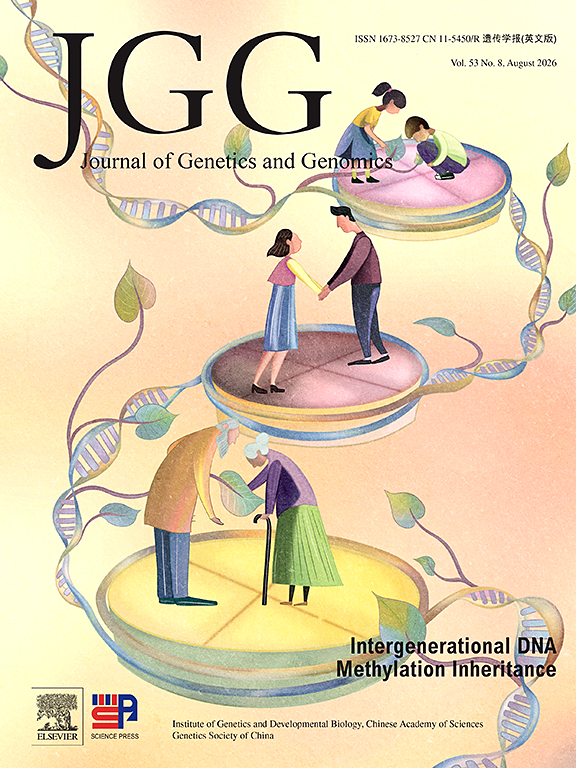
Haplotype-resolved methylation profiling across three generations reveals principles of human epigenetic inheritance
Hongling Zhou, Weixue Mu, Jinjin Xu, Xin Bai, Yang Zhou, Ao Lan, Bo Wu, Lei Nie, Xia Shen, Chentao Yang, Linzhou Li, Yanni Song, Dongya Wu, Guangji Chen, Hailin Liu, Xiaobo Wang, Xin Jin, Chuanle Xiao, Guojie Zhang, Stephen Kwok-Wing Tsui, Jue Ruan
2026, 53(8): 1437-1450. doi: 10.1016/j.jgg.2026.03.011
Abstract (142)
Abstract:
Epigenetic inheritance is fundamental to human development and disease, yet the mechanisms governing the transmission of DNA methylation across generations remain incompletely understood. In this study, we performed haplotype-resolved, whole-genome DNA methylation profiling in a healthy three-generation Chinese family, leveraging high-depth Oxford Nanopore Technologies (ONT) and PacBio HiFi long-read sequencing, anchored to a proband-specific telomere-to-telomere (T2T) genome assembly. We observed globally conserved bimodal methylation landscapes across all individuals and generations. Stratified analyses revealed clear functional compartmentalization of methylation marks, characterized by distinct hypomethylation in centromeres and hypermethylation in retrotransposons and repetitive elements. Chromosome-resolved analysis of ribosomal DNA (rDNA) arrays demonstrated a domain-specific methylation pattern with hypomethylation in the transcriptional core and hypermethylation in the intergenic spacer, with evidence for age-associated epigenetic drift in the transcriptional core domain. Through de novo identification and validation, we mapped 23 high-confidence imprinting control regions (ICRs) showing robust parent-of-origin-specific methylation, all overlapping known imprinted genes and enriched for regulatory element signatures. Haplotype-resolved X chromosome analysis further uncovered sex- and allele-specific methylation patterns linked to X inactivation dynamics. Together, this pedigree-scale, high-resolution study delineates the landscape and principles of intergenerational DNA methylation inheritance, revealing both conserved and dynamic features shaping the human epigenome.
The single cell transcriptomic landscape of recurrent giant cell tumor of bone following neoadjuvant denosumab therapy
Xianglin Hu, Huajian Wu, Biqiang Zheng, Chao Liang, Bochong Shi, Qingrong Ye, Shuoer Wang, Weiluo Cai, Tu Hu, Yong Chen, Mo Cheng, Wangjun Yan, Wending Huang
2026, 53(8): 1451-1464. doi: 10.1016/j.jgg.2026.03.001
Abstract (150)
Abstract:
Denosumab (DMAb) is widely used as a neoadjuvant therapy to downstage giant cell tumor of bone (GCTB). However, increasing evidence demonstrates that neoadjuvant DMAb may increase the local recurrence (LR) risk following curettage of GCTB. It remains unclear about the potential mechanisms for neoadjuvant DMAb-associated LR of GCTB. Here, we perform single-cell RNA sequencing on untreated primary GCTB, neoadjuvant DMAb-treated primary GCTB, and relapsed GCTB following discontinuation of DMAb after curettage. A total of 33,440 cells are obtained. Osteoclast-like giant cells nearly disappear in primary GCTB after neoadjuvant DMAb treatment, but rebound following DMAb discontinuation in recurrent GCTB. Neoadjuvant DMAb therapy induces the transformation of TNFSF11 (RANKL)-positive neoplastic cells into SPP1 (osteopontin)-positive and CA2-positive neoplastic cells. Neoadjuvant DMAb therapy induces a durable intratumoral immunosuppressive environment, characterized by an increased frequency of regulatory T cells and decreased levels of cytotoxic CD8+ T cells and natural killer T (NKT) cells. In addition, DMAb-induced differentiation of monocytes to Trem2+ macrophages provides a favorable microenvironment that facilitates tumor relapse. CSF1R inhibitor can inhibit the tumor growth of recurrent GCTB. Targeting CSF1R and alleviating T cell exhaustion may provide therapeutic insights for the management of relapsed GCTB following DMAb discontinuation.
Whole-genome sequencing of 2032 diverse tobacco accessions reveals genetic variation and population differentiation
Xiong Zheng, Zhijun Tong, Asad Ullah, Tianle Zhu, Mingzhe Suo, Fangchan Jiao, Xingfu Wu, Haiming Xu, Feng Lin, Xuejun Chen, Bingguang Xiao
2026, 53(8): 1465-1477. doi: 10.1016/j.jgg.2026.02.025
Abstract (149)
Abstract:
Nicotiana tabacum is an allotetraploid hybrid and a widely used model organism in plant genetics. Despite its agricultural and biological significance, large-scale genomic studies and comprehensive analysis of population differentiation in tobacco remain limited. Here, we perform whole-genome resequencing of 2032 diverse tobacco accessions, identifying 59 million single-nucleotide polymorphisms and 8.3 million small insertions and deletions. These variants contribute to substantial genetic diversity both within and between populations. Population genetic structure analysis reveals two major genetic subpopulations, with the differentiation primarily driven by breeding practices. Notably, the genetic differentiation between varieties is greater than that observed between tobacco types. Shared divergent regions across six types are enriched in defense, epidermal development, and lipid metabolism pathways, reflecting selection for stress adaptation and plant growth. We further identify 302 accessions exhibiting strong signatures of selection in immune-related genes, highlighting their potential as parental lines in resistance breeding programs. Selective sweeps in major cultivars overlap with 19 previously identified quantitative trait loci, primarily associated with agronomic traits such as leaf morphology, disease resistance, and chemical traits. This study provides a high-resolution genomic resource for in-depth tobacco genomics research and offers valuable insights into precision breeding.
Genetic regulatory landscape of gene expression during leaf and stem development in common tobacco
Mou Yin, Zhimeng Zhang, Yuexuan Hou, Yueying Wan, Qiaoling Luo, Chunqiong Wang, Xiaowei Zhang, Haowei Sun, Jie Long, Jieyun Cai, Dan Chen, Shibin Xu, Yingjiao Xiao, Yingyue Li, Qiqing Tang, Chenxi Zhang, Mengdi Zhao, Xinting Yang, Jiamei Chen, Dexin Liu, Fei He, Ke Zhang, Zhijun Tong
2026, 53(8): 1478-1494. doi: 10.1016/j.jgg.2026.03.016
Abstract (115)
Abstract:
Common tobacco (Nicotiana tabacum L.) is an important allotetraploid crop, yet the genetic regulation of gene expression during development remains poorly understood. Here, we conduct whole-genome and transcriptome sequencing of 220 diverse tobacco accessions to dissect the genetic architecture and regulatory mechanisms underlying trait variation. We identify 3.24 million SNPs and 231,700 InDels, characterizing population structure and genomic features. Our analysis reveals two genetically distinct subpopulations within the flue-cured tobacco that are differentiated across five large genomic segments on chromosomes 2S, 2T, and 12S, which exhibit elevated SNP density, nucleotide diversity, and fixation indices. A genetic regulatory atlas of gene expression, constructed using expression quantitative trait locus (eQTL) mapping across four developmental stages, reveals asymmetric gene expression regulation between subgenomes. Genome-wide association studies (GWAS) and transcriptome-wide association studies (TWAS) for eight leaf and stem architecture traits identify 43 quantitative trait loci (QTLs) and 153 candidate genes. Furthermore, we jointly analyze TWAS and eQTL summary statistics to construct gene regulatory networks underlying leaf and stem traits, uncovering substantial rewiring of gene regulations across developmental stages. The genomic and transcriptomic datasets generated in this study provide a valuable resource and insights into the genetic architecture of important traits in common tobacco.
SlbHLH36–SlAAP8 alleviates heat-induced pollen abortion by regulating amino acid metabolism in tomato
Xiangyu Ding, Qi Qiang, Guo Xu, Wenyu Zhao, Zhonghui Zhang, Chao Wang, Xumin Ou, Jie Yang, Shouchuang Wang, Jun Yang
2026, 53(8): 1495-1507. doi: 10.1016/j.jgg.2026.03.002
Abstract (145)
Abstract:
Under environmental stress, plants dynamically reprogram amino acid metabolism and long-distance transport to facilitate efficient nutrient reallocation. However, amino acid transporters in tomato remain poorly characterized, especially with respect to their functional roles, transcriptional regulation, and influence on pollen fertility under heat stress. In this study, a metabolite-based genome-wide association study identifies an amino acid transporter, amino acid permease 8 (SlAAP8), that is significantly associated with the content of multiple amino acids. SlAAP8 is primarily expressed in tomato flowers and exhibits broad-spectrum amino acid transport activity. Overexpression of SlAAP8 (SlAAP8-OE) promotes amino acid accumulation in stamen tissues and enhances pollen viability under high-temperature conditions. Furthermore, we identify a transcription factor, SlbHLH36, that directly binds to the E-box (CANNTG) motif in the SlAAP8 promoter and activates its transcription. Heat stress significantly upregulates the expression of both SlbHLH36 and SlAAP8, thereby improving pollen viability under high-temperature conditions by modulating amino acid metabolism and antioxidant activity, as well as reducing malondialdehyde accumulation. Together, these findings suggest that the SlbHLH36-SlAAP8 module enhances tomato pollen viability under heat stress through regulating amino acid metabolism and scavenging reactive oxygen species, providing a potential avenue to improve crop yields under global warming.
The temporal transcriptional regulation enhances genomic prediction accuracy for poplar radial growth
Chenchen Guo, Xuan Yang, Shicheng Pang, Yingnan Chen, Jianjun Hu, Suyun Wei
2026, 53(8): 1508-1518. doi: 10.1016/j.jgg.2026.02.026
Abstract:
The growth rhythm of perennial plants is precisely regulated by stage-specific transcriptional programs. This study investigates the genetic mechanisms underlying seasonal radial growth in poplar and improves genomic selection by leveraging these regulatory signals. Longitudinal transcriptome profiles of 100 individuals across five critical developmental stages are integrated with whole-genome and dynamic growth phenotypes to identify core regulatory genes and functional networks. Transcriptome-wide association studies reveal limited overlap of stem diameter-associated genes across developmental stages, with stage-enriched biological processes supporting dynamic transcriptional regulation during poplar radial growth. Co-expression network analysis further demonstrates that energy metabolism centered on the tricarboxylic acid cycle serves as a key biological process driving rapid radial growth. Through multi-omics integration, core candidate genes that coordinately regulate essential pathways are identified, including cell division, polar expansion, energy allocation, and auxin transport. Notably, targeted transcriptome-integrated models incorporating these functionally important genes significantly improve the predictive accuracy of genomic selection for stem diameter compared to conventional whole-genome or transcriptome-based approaches. This study reveals the temporal molecular regulatory mechanisms underlying poplar radial growth and proposes an effective strategy for enhancing genomic prediction accuracy by integrating trait-associated transcriptional signals, offering a promising framework for precision breeding in perennial trees.
Structural variation-driven FADS2P1 expression modulates hair trait diversity through unsaturated fatty acid metabolism in goats
Wenze Li, Qi Lv, Yixin Su, Can Liu, Xianjin Jing, Yujiang Wu, Xin Wang, Guobo Quan, Di Han, Chun Li, Bouabid Badaoui, Langda Suo, Gao Gong, Na Wang, Oljibilig Chen, Yixing Fan, Jianning He, Shaobin Li, Peng Zhao, Xiaochun Yan, Ruijun Wang, Yanjun Zhang, Jinquan Li, Zhiying Wang, Yongbin Liu, Rui Su
2026, 53(8): 1519-1534. doi: 10.1016/j.jgg.2026.03.007
Abstract (137)
Abstract:
Through natural and artificial selection, goats develop distinct hair phenotypes driven by genomic variations, such as structural variations (SVs). The fatty acid desaturase (FADS) family plays an important role in hair follicle (HF) growth, yet its molecular mechanisms remain unclear. In this study, we construct a goat graph-based pangenome containing 99,792 non-redundant presence-absence variations (PAVs) from 16 goat breeds. Using this pangenome, we identify 15,866 allelic variants of PAVs with distinct dominant frequencies (dPAVs) from the resequencing data of 300 goats. Among them, 1290 dPAVs regulate the expression of 772 corresponding genes in cashmere goats (CGs) with different hair types over 12 months. We identify an expanded FADS2P1 gene family with two intact copies and one truncated copy within segmental duplications. An intron deletion in the truncated FADS2P1 copy shows population-specific distribution patterns among goats with cashmere traits. All FADS2P1 copies are significantly upregulated in short-hair CGs, and their expression levels are negatively correlated with oleic acid (OA) levels. Functional validation in FADS2P1 knock-in mice indicates a slower hair growth rate and reduced HF numbers. These findings demonstrate that SV-driven FADS2P1 expression regulates HF development and growth through OA metabolism, providing insights into how PAVs influence complex phenotypes.
Engineering Tregs-mediated immune tolerance via foxp3a overexpression to evade allograft transplantation barriers in zebrafish
Junwen Zhu, Yongkang Hao, Fenghua Zhang, Xiaxia Gao, Houpeng Wang, Liqun Yu, Xiaosi Wang, Yonghua Sun
2026, 53(8): 1535-1549. doi: 10.1016/j.jgg.2026.02.024
Abstract (152)
Abstract:
In mammals, regulatory T cells (Tregs) are widely exploited to promote immune tolerance in organ transplantation. In zebrafish, although germline stem cell (GSC) or gonadal primordium transplantation into immunodeficient hosts can accelerate gamete production, maintaining immunocompromised lines presents substantial practical challenges. To overcome this limitation, this study generates a Tg(CMV:foxp3a) zebrafish line through systemic overexpression of Forkhead box P3a (Foxp3a), the lineage-defining transcription factor of Tregs. Transcriptomic and in situ hybridization analysis reveal downregulation of the Treg negative regulator cd127 and upregulation of multiple immunosuppressive factors in the head kidney and thymus. Single-cell RNA sequencing further demonstrates a reduction in effector T and B cell populations, accompanied by an increase in quiescent T cells exhibiting resting Treg-like features. Importantly, using Tg(CMV:foxp3a) fish as hosts for subcutaneous gonadal primordium transplantation and intraperitoneal GSC transplantation markedly accelerates germ cell maturation and enables efficient establishment of stable transgenic lines. Post-transplantation analysis indicates delayed and attenuated immune activation, enhanced graft survival, and rapid induction of immunosuppressive states. Together, foxp3a overexpression reshapes the immune landscape to confer immune tolerance, providing a practical Tregs-based alternative to immunodeficient hosts for fish genome manipulation and transplantation.
Resource
CliPME: the clinical pathogenic bacteria mutation and expression database
Hongxiang Xu, Yu Huang, Mingjun Zhang, Sirui Liu, Jiayue Hu, Zibei Huang, Yiran Liao, Tianyu Zhang, Qiao Zhang, Haiqi Chen, Abudukadier Abulimiti, Lijuan Guo, Peibo Li, Jianping Xie
2026, 53(8): 1550-1558. doi: 10.1016/j.jgg.2026.02.020
Abstract (121)
Abstract:
The ongoing battle between humans and pathogenic bacteria has fueled rapid microbial evolution. Although whole-genome sequencing (WGS) has transformed the ability to track genomic mutations, existing tools lack comprehensive solutions for analyzing mutational patterns and their functional consequences in pathogenic bacteria. Here, we present CliPME, an innovative platform that bridges this critical gap by combining mutation detection, mutation effect prediction, and regulatory network analysis, specifically designed for bacterial genomics. We develop qMut, a high-performance R package designed for large-scale mutation profiling. Coupled with three major functional modules called MutFinder, MutAnalyzer, and ExpMiner, CliPME integrates population-level mutation analysis, functional mutation predictions, and estimation of gene-gene expression relationships. Using Mycobacterium tuberculosis (Mtb) as a case study, we show the power of CliPME by identifying functionally significant mutations in the transcription factor Rv0324, and experimentally demonstrate the link of its genetic variation to potential adaptive phenotypes. This resource empowers researchers to decode evolutionary mechanisms in bacterial pathogens and may accelerate the translation of genomic insights into antimicrobial strategies. The web server of CliPME is freely accessible at https://www.clipme.top/.
Research Communications
Biallelic GSPT1 variants are associated with a syndromic neurodevelopmental disorder characterized by intellectual disability and microcephaly
Kai Liu, Yuda Wei, Yanyan Hu, Xingzhu Geng, Xiaxia Liu, Hongyan Xu, Yikai Miao, Yongzhen Xue, Chunhai Gao, Xiangyu Zhao
2026, 53(8): 1559-1562. doi: 10.1016/j.jgg.2026.02.019
Abstract (119)
Abstract:
Genetic basis of canine separation-related behavior: putative enhancer-dependent regulation of SLC32A1 and conservation in human psychiatric disorders
Yun Yu, Yaoyue Wu, Huairen Zhao, Zijuan Zhou, Jing Bai, Yuedong Zhang, Fengyun Zhang, Bowen Zhou, Jingyu Wang, Ya-Ping Zhang
2026, 53(8): 1563-1566. doi: 10.1016/j.jgg.2026.03.003
Abstract:
Near telomere-to-telomere genome assembly of Lannea coromandelica provides insights into karyotype evolution in Anacardiaceae
Liqiang Hou, Xiaozhu Guo, Zhaozhen Yang, Jin Zhang, Yuqi Zhang, Qian Liu, Zhenda Xu, Yan Sun, Qianru Liu, Nannan Zhang, Ling Ma, Guangsen Zhou, Guili Wu, Dongshi Wan, Yongzhi Yang, Ying Li, Zhimin Niu
2026, 53(8): 1567-1570. doi: 10.1016/j.jgg.2026.02.010
Abstract (229)
Abstract:
Corrigendum
Corrigendum to “Multidisciplinary exploration of ancient atherosclerosis: Paleo-genomic and paleo-nutritional analysis of a 13th century artificial mummy in China” [J. Genet. Genom. (2026) 53, 906–918]
Bangyan Wang, Rui Wang, Duo Zheng, Baoshuai Zhang, Yu Shao, Jianxue Xiong, Panxin Du, Zixi Jiang, Lobsang Dargye, Edward Allen, Chenshuang Sun, Yiwen Shen, Bowen Gong, Pengfei Sheng, Liugen Lin, Jiucun Wang, Chuan-Chao Wang, Shaoqing Wen
2026, 53(8): 1571-1572. doi: 10.1016/j.jgg.2026.06.004
Abstract: