9.9
CiteScore
7.1
Impact Factor

Current Issue

2026 Vol. 53, No. 5

Display Method:
Review
Tiny genome with big impact: mitochondrial DNA in cardiovascular health
Yafang Yang, Jiaoyu Li, Lu Qian, Yuyan Xiong, Yi Yu
2026, 53(5): 767-783. doi: 10.1016/j.jgg.2025.12.009
Abstract:
Cardiovascular diseases remain the leading cause of mortality worldwide. Mitochondrion, a key cellular organelle, harbors its own mitochondrial DNA (mtDNA) fundamental to cellular energy production through oxidative phosphorylation (OXPHOS). Beyond its canonical bioenergetic function, mtDNA integrity, copy number, and genetic variation play critical roles in maintaining cardiovascular function. This review provides a comprehensive overview of the multifaceted contributions of mtDNA to cardiovascular health and disease. We summarize the structural features and core biological functions of mtDNA, as well as the regulatory mechanisms governing its replication, biogenesis, and turnover. Particular emphasis is focused on mtDNA abnormalities, including point mutations, large-scale deletions, copy number alterations, and epigenetic modifications, and how these disturbances drive key pathogenic processes such as oxidative stress, chronic inflammation, apoptosis, and cellular senescence within the cardiovascular system. Furthermore, we highlight accumulating evidence linking mtDNA dysregulation to major cardiovascular disorders, including heart failure, atherosclerosis, and hypertension. Finally, we discuss the emerging diagnostic potential of circulating cell-free mtDNA and related mtDNA-derived metrics as non-invasive biomarkers, and outline therapeutic strategies aimed at preserving mtDNA integrity, modulating mtDNA content, or applying gene-based interventions to mitigate cardiovascular pathology.

The roles of strigolactones in plant resilience to environmental stresses
Yanting Wang, Mohammad Golam Mostofa, Feifei Yi, Lam-Son Phan Tran, Weiqiang Li
2026, 53(5): 784-797. doi: 10.1016/j.jgg.2025.12.001
Abstract:
Strigolactones (SLs) are a group of phytohormones that enhance hyphal branching of arbuscular mycorrhizal fungi (AMF), promote seed germination of parasitic plants, and influence plant growth, development, and stress acclimation. SLs improve plant stress resilience by modulating shoot and root architecture, photosynthesis, nutrient homeostasis, and antioxidant defense. Under nutrient deficiency, SL accumulation enhances AMF colonization and triggers the expression of genes related to the nutrient starvation response. When subjected to drought, SLs mitigate water loss by modulating stomatal density and closure, cell membrane integrity, and anthocyanin biosynthesis. SLs also mitigate salinity and heavy metal stresses by maintaining ion homeostasis, while conferring thermotolerance and enhancing chilling tolerance. In this review, we highlight recent advances in SLs and their mechanisms in plant responses to environmental stresses, including nutrient deficiencies, drought, salinity, extreme temperatures, metal toxicity, herbivore attack, and pathogen infection. We further discuss how SLs interact with other phytohormones to coordinate the physiological, biochemical, and molecular regulatory events critical for plant acclimation to abiotic and biotic stresses.
K48- and K63-linked ubiquitination in plant development and stress responses
Yueni Fan, Wenguan Zhou, Baoshan Xian, Kai Shu
2026, 53(5): 798-809. doi: 10.1016/j.jgg.2025.12.012
Abstract:
Ubiquitination is a crucial post-translational modification regulating numerous biological processes in plant development and stress responses. This process involves the covalent attachment of ubiquitin molecules to different target proteins, primarily linked through lysine (K)48 or K63 residues of ubiquitin, which either marks them for degradation by the 26S proteasome or modifies their activity, localization, and stability. By modulating key regulatory proteins and signaling pathways, ubiquitination enables plants to adapt to challenging environments. K48-linked ubiquitination is the most prevalent form in plants, although some recent studies have also demonstrated the importance of K63-linked ubiquitination. This review focuses on the roles of K48- and K63-linked ubiquitination in plant development, including seed dormancy and germination, seed size, hypocotyl elongation, and flowering time, as well as in abiotic and biotic stresses. Furthermore, it highlights their potential functions in improving crop resilience through biotechnological strategies. Finally, we also discuss the future challenges in investigating plant regulatory networks mediated by protein ubiquitination.
Original Research
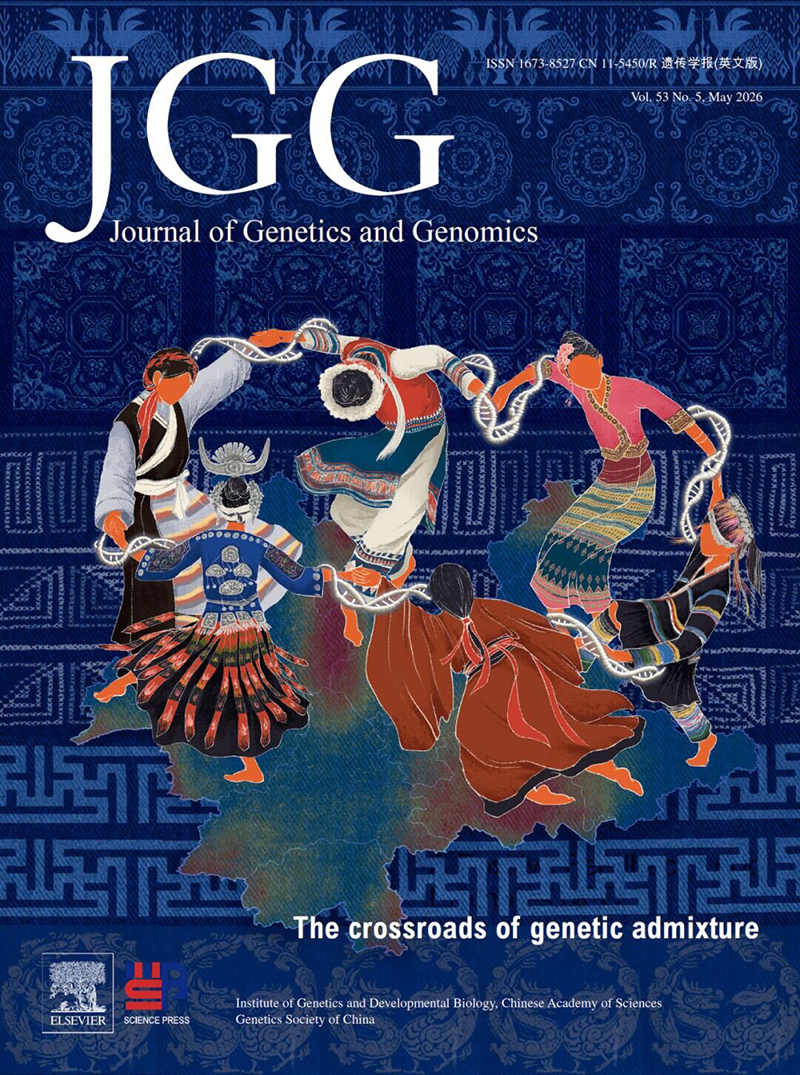
Whole-genome sequencing reveals Yunnan as the crossroads of east and Southeast Asia for human gene flow
Xiaobo Qian, Bo Li, Jianmei Liu, Yushan Huang, Wenxi Gu, Yuwen Zhou, Qiong Nan, Chao Wang, Le Cheng, Junkun Niu, Fengrui Zhang, Qian Li, Xiuqing Zhang, Jinlong Yang, Yinglei Miao, Mingyan Fang, Xin Jin, Yang Sun
2026, 53(5): 810-826. doi: 10.1016/j.jgg.2026.01.003
Abstract (0) PDF (0)
Abstract:
Yunnan Province has long served as a key nexus facilitating economic and cultural exchanges between East Asia, Southeast Asia, and Qinghai-Xizang Plateau. However, previous genetic studies were largely limited by sparse marker density, low sequencing depth, or single-population designs, leaving the population genetic structure and demographic history insufficiently resolved. Here, we conduct a high-resolution population genetic study based on 366 high-depth whole-genome sequencing samples from 6 ethnic groups, including Bai, Dai, Hani, Miao, Tibetan, and Han. We identify approximately 3.51 million novel variants and reveal fine-scale population structure and complex demographic histories among Yunnan ethnic groups. Beyond the three ancestries proposed by the tri-genealogy hypothesis, we detect a Han Chinese-related lineage, Yan-Huang, within multiple Yunnan populations. We further demonstrate that Yunnan represents a major gene-flow hotspot across East and Southeast Asia despite geographic barriers. Finally, we identify genomic loci under positive selection with candidate genes enriched in immune regulation, energy metabolism, cardiac development, and dietary adaptation, highlighting the role of local environmental pressures in shaping the genetic diversity of Yunnan populations.
High-quality genome assembly of Carex capillifolia reveals genetic adaptations to drought stress in the Qinghai-Xizang plateau
Yanli Xiong, Qingqing Yu, Yi Xiong, Minghong You, Li He, Guochao Wu, Jinghan Peng, Lijun Yan, Dongzhou Deng, Xiao Ma, Dechao Chen, Daxu Li, Xiong Lei
2026, 53(5): 827-840. doi: 10.1016/j.jgg.2025.12.011
Abstract:
Carex capillifolia is an ecologically and economically important fodder grass widely distributed across the Northern Hemisphere, particularly in the Qinghai-Xizang Plateau. Research into its genetic diversity and genomic architecture has been limited. In this study, we present a high-quality genome assembly for C. capillifolia, spanning 386.65 Mb (contig N50 = 14.66 Mb) and comprising 29 chromosomes. Phylogenetic analysis reveals a close evolutionary relationship with C. littledalei, with divergence estimated at 2.19–6.1 million years ago. Comparative genomics analyses identify 26 shared chromosome fusion events specifically between these two species, highlighting a pattern of recent, lineage-specific karyotype reshuffling that contributes to the remarkable karyotypic diversity within Cyperaceae. Using population genomics, genome-environment association (GEA), and transcriptome analysis, we identify multiple climate-associated genetic variants and drought-tolerance genes. Notably, we identify an auxin response factor (ARF) gene and verify its role in enhancing drought tolerance through transgenic experiments. Furthermore, we pinpoint the Ruoergai (RRG) geo-group as possessing the highest adaptability to future climates, which harbors superior adaptive genetic variation and candidate genes that could be targeted in breeding closely related species.
ATP6V1C1 deficiency impairs auditory and vestibular hair cell function and leads to sensorineural hearing loss in humans and mice
Qingyue Yuan, Hao Zheng, Jun Xu, Yun Lin, Jingyu Liu, Hu Peng, Ningning Yuan, Xiaofei Zheng, Hao Wu, Xiuhong Pang, Tao Yang
2026, 53(5): 841-853. doi: 10.1016/j.jgg.2026.01.005
Abstract:
Multiple genes encoding v-ATPase subunits are associated with various forms of syndromic hearing loss. Their functions in hair cells, the key sensory cells required for hearing and balance, remain unclear. In this study, linkage analysis and exome sequencing of a large autosomal dominant family with non-syndromic deafness identify a pathogenic p.R281P variant in ATP6V1C1 that encodes the C1 subunit of the v-ATPase. Conditional knock-out (CKO) of Atp6v1c1 in mouse hair cells results in early-onset sensorineural hearing loss and vestibular malfunction. The CKO mice show synaptic defects in inner hair cells, evidenced by decreased wave I amplitude and prolonged latency of the auditory brainstem responses, loss of inner hair cell ribbon synapses, accumulation of endocytic compartments, and absence of F-actin mesh network surrounding the active zones. The cochlear and vestibular hair cells of the CKO mice also undergo disrupted autophagic flux and apoptosis. The Atp6v1c1 p.R281P knock-in mice develop late-onset, high-frequency hearing loss with normal hair cell morphology but degenerated spiral ganglion neurons due to disrupted autophagic flux and apoptosis. Our study reveals ATP6V1C1 as a causative gene for non-syndromic deafness and its important roles in maintenance and synaptic function of hair cells.
HNRNPH2 variant linked to intellectual disability disrupts myelination by impairing oligodendrocyte differentiation
Yang Jiao, Xingyu Pan, Jingrong Zhao, Xiaoyu Teng, Xiaoyi Liao, Xinyu Hu, Qiu Wang, Dandan Zheng, Yuxiang Pan, Xiaohui Deng, Xinyi Tan, Yun Stone Shi, Xu Zhang, Lan Bao, Bin Wang
2026, 53(5): 854-867. doi: 10.1016/j.jgg.2025.12.006
Abstract:
Intellectual disability (ID) arises from complex pathogenic mechanisms. Although myelin dysfunction and white matter damage have been implicated, the cellular and molecular mechanisms linking impaired myelination to cognitive deficits remain largely unknown. Here, we identify a de novo heterogeneous nuclear ribonucleoprotein H2 (HNRNPH2) variant, c.638C>T (p.Pro213Leu), in patients with ID. The Hnrnph2P213L knock-in mice display spatial learning deficits, representing a partial phenotypic overlap with HNRNPH2-related neurodevelopmental disorder. Notably, Hnrnph2P213L mice exhibit significant myelination defects, primarily due to the impaired differentiation of oligodendrocyte progenitor cells. Furthermore, the myelin-enhancing drug benztropine rescues myelination, restores myelin-related gene expression, and ameliorates cognitive deficits, highlighting the role of hnRNPH2 P213L-induced myelin abnormalities in the pathogenesis of ID. Mechanistically, the P213L mutation disrupts the interaction between hnRNPH2 and its target transcripts, leading to the downregulation of myelination-related genes. Collectively, these findings reveal a critical mechanistic connection between myelin dysfunction and ID, thereby offering potential therapeutic insights for X-linked neurodevelopmental disorders.
The quantitative trait locus stiff2 controls stalk bending strength and root architecture in maize
Shuyang Zhong, Le Xu, Zhihai Zhang, Yan Li, Zhongwei Lin
2026, 53(5): 868-878. doi: 10.1016/j.jgg.2025.11.014
Abstract:
Stalk lodging is a major threat to global maize production, which causes great annual yield losses. Stalk bending strength (SBS) is highly associated with resistance to stalk lodging in maize. However, the genetic basis of SBS remains largely unknown. In this study, we identify a quantitative trait locus (QTL), stiff2, corresponding to a known flowering-time gene ZmCCT, by integrating QTL mapping and association mapping. A 5-kilobase (kb) transposable element inserted in the promoter region of ZmCCT significantly reduces SBS, while upregulated expression of ZmCCT through transformation significantly enhances SBS. Gene regulatory network analysis reveals that ZmCCT may indirectly regulate a set of downstream genes, which contain nrt5 for nitrogen transport, Tu1, d8, and d9 for stalk elongation, ub2, ub3, and ch1 for stalk thickening, and myb69 and bm4 for lignin biosynthesis. These genes collectively increase stalk strength and improve lodging resistance aboveground. Additionally, stiff2 regulates not only aboveground resistance to stalk bending and breakage but also influences root system architecture, which enhances resistance to root lodging belowground. The identification of stiff2 and its downstream targets provides critical insights into the genetic control of maize lodging and offers powerful tools for breeding lodging-resistant cultivars.
Metabolite-QTL analysis reveals genetic basis of phenolic acid metabolism in barley grains
Ruilian Song, Siyu Zhang, Yixiang Wang, Yuhan Liu, Likun Liu, Chen Zhang, Yanjun Li, Qifei Wang, Genlou Sun, Xifeng Ren
2026, 53(5): 879-893. doi: 10.1016/j.jgg.2025.12.004
Abstract:
Phenolic acid metabolites play important physiological roles, and many genetic loci affecting phenolic acid metabolism traits have been identified in several crops. Although barley is one of the important cereal crops, research on the genetic basis of phenolic acid synthesis in barley grains remains limited. Here, we analyze the 39 phenolic acid metabolites detected in mature grains of barley double haploid (DH) population and further identify 154 metabolite quantitative trait loci (mQTLs) related to 36 phenolic acids using four mapping methods. Subsequently, we identify 12 candidate genes that affect the content of phenolic acid metabolites, and overexpression of one candidate gene, HvCOMT-1, in barley reveals its involvement in the synthesis of phenolic acids. Moreover, we show that the transcription factor HvMYB-1 regulates the expression of HvCOMT-1. Functional analysis in Arabidopsis shows that HvCOMT-1 increases stem diameter and lignin deposition. Further analysis reveals that the expression level of HvCOMT-1 is closely related to the barley lodging-related traits. Overall, our findings enhance the understanding of the genetic basis for phenolic acid variations in mature barley grains and provide valuable reference for genetic improvement of barley nutritional quality.
An elite haplotype of the glutamine synthetase gene TaGS1.1-6A is associated with increased nitrogen use- and yield-related traits in wheat
Yazhou Wang, Wan Teng, Mingyang Lei, Yanpeng Wang, Xiang Ouyang, Caixia Gao, Ruilian Jing, Junming Li, Yiping Tong
2026, 53(5): 894-905. doi: 10.1016/j.jgg.2025.12.008
Abstract:
Glutamine synthetase (GS) plays a crucial role in nitrogen (N) assimilation. Identifying elite alleles of GS genes can facilitate the breeding of wheat (Triticum aestivum) varieties with improved N use efficiency (NUE). Here, meta-quantitative trait loci (QTL) analysis based on five bi-parental linkage mapping populations reveals that TaGS1.1-6A co-localizes with a meta-QTL for N use- and yield-related traits. The promoter region of TaGS1.1-6A contains a variation caused by a miniature inverted-repeat transposable element (MITE) insertion. The MITE insertion induces DNA hypermethylation in the adjacent regions, thereby repressing TaGS1.1-6A transcription. The haplotype TaGS1.1-6AHapII without the MITE insertion has been subjected to selection during wheat breeding, and is associated with increased photosynthetic N use efficiency, N utilization efficiency, spike grain number, and grain yield per plant when a BC3F4 population is grown under varying N supply levels. Conversely, CRISPR/Cas9-mediated mutation of TaGS1.1 shows reduction in these traits. Furthermore, we develop a breeding strategy to enhance wheat grain yield under different N supply conditions by pyramiding TaGS1.1-6AHapII and the leaf senescence-delaying haplotype of TaNAM-A1. These findings suggest that TaGS1.1-6A contributes to N use- and yield-related traits, and TaGS1.1-6AHapII holds significant value for breeding wheat with improved NUE and yield.
Multidisciplinary exploration of ancient atherosclerosis: Paleo-genomic and paleo-nutritional analysis of a 13th century artificial mummy in China
Bangyan Wang, Rui Wang, Duo Zheng, Baoshuai Zhang, Yu Shao, Jianxue Xiong, Panxin Du, Zixi Jiang, Lobsang Dargye, Edward Allen, Chenshuang Sun, Yiwen Shen, Bowen Gong, Pengfei Sheng, Liugen Lin, Jiucun Wang, Chuan-Chao Wang, Shaoqing Wen
2026, 53(5): 906-918. doi: 10.1016/j.jgg.2026.01.004
Abstract:
The 13th-century Changzhou Mummy, from the Lower Yangtze region in China, is the earliest known East Asian case of an artificially mummified body employing mercury and cinnabar enema without evisceration. This study conducts multidisciplinary research, integrating paleo-radiological, paleo-pathological, paleo-genetic, and paleo-nutritional analysis to investigate the phenotype, genotype, individual life history, and the process of deliberate mummification performed on this individual. We generate a whole genome with 12.7× coverage, revealing potential genetic predisposition for several atherosclerotic cardiovascular diseases (ASCVD). Stable C and N isotope analysis of bones, teeth, and hairs indicates high animal protein consumption as well as terminal illness. Hereditary and dietary risk factors are consistent with the diagnosis of atherosclerosis determined via postmortem examination. Our study, leveraging high-quality ancient DNA, provides a unique opportunity to challenge and rethink the widely accepted consensus on the relationship between atherosclerosis and post-industrial age lifestyles, uncovering unrecognized genetic polymorphisms of ASCVD among ancient individuals, and improving our understanding of the role of genetic factors in the development and evolution of ASCVD.
SYMPK interacts with KIF20A and NUMA1 to coordinate spindle organization and safeguard oocyte meiotic maturation
Bei Chen, Mofan Zhou, Jiaqi Wang, Jinxin Xiao, Yirong Chen, Jinying Wang, Wenlin He, Tianbao Song, Jin Luo, Qingzhen Xie, Cong Liu
2026, 53(5): 919-933. doi: 10.1016/j.jgg.2026.01.002
Abstract (0) PDF (1)
Abstract:
Mammalian oocyte maturation relies on the precise assembly of the acentrosomal spindle, and its disruption causes aneuploidy and developmental failure. Symplekin (SYMPK), a 3′-end processing scaffold with emerging functions in regulating chromosome dynamics, remains unexplored in oocytes. Here, we investigate whether SYMPK governs spindle dynamics and chromosome fidelity during meiotic maturation. We find SYMPK dynamically tracks spindle microtubules during oocyte maturation following germinal vesicle breakdown (GVBD). By generating oocyte-specific Sympk knockout mice, loss of SYMPK in oocytes yields complete female infertility and impaired oocyte quality. Sympk-deficient oocytes show a predominant metaphase I (MI) arrest, accompanied by disorganized spindle architecture and destabilized kinetochore-microtubule attachments. Furthermore, chromosome spreads indicate persistent spindle assembly checkpoint (SAC) activation, and pharmacologic SAC inhibition can partially restore meiotic progression but not spindle integrity in SYMPK-deficient oocytes. Mechanistically, immunoprecipitation-mass spectrometry in MI oocytes reveals that SYMPK interacts with the spindle regulators KIF20A and NUMA1, and is required for their proper localization to the spindle. Collectively, these findings establish that SYMPK supports KIF20A and NUMA1 to coordinate acentrosomal spindle organization, thereby safeguarding oocyte meiotic maturation and ensuring faithful female meiotic progression.
Dissecting the functional roles of CTCF and CTCF-s in human embryonic stem cells
Hongxin Zhong, Yuli Lu, Jie Zhang, Gongcheng Hu, Guangjin Pan, Hongjie Yao
2026, 53(5): 934-945. doi: 10.1016/j.jgg.2025.12.007
Abstract:
CTCF is a highly conserved zinc finger protein that plays critical roles in transcriptional regulation and three-dimensional (3D) genome organization. An alternative splice isoform of CTCF (CTCF-s), lacking the N-terminal domain and 2.5 zinc fingers, competes with CTCF for genomic occupancy and reduces CTCF-mediated chromatin interactions. However, the functional differences between CTCF and CTCF-s remain unclear. In this study, by using an auxin-inducible degron (AID2) system with doxycycline-inducible transgene expression, we systematically investigate the roles of CTCF and CTCF-s in human embryonic stem cells (hESCs). Acute degradation of endogenous CTCF and CTCF-s, followed by isoform-specific rescue, reveals that CTCF is essential for cell morphology and proliferation, whereas CTCF-s exerts much weaker effects. Genome-wide ChIP-seq and Hi-C analysis uncover distinct binding landscapes for CTCF and CTCF-s, as well as their differential contributions to chromatin conformation. Notably, our data indicate that CTCF-s, like CTCF, could either act as a boundary insulator or bind to gene promoters to modulate expression of a fraction of genes. Overall, our study reveals that CTCF is dominant in regulating chromatin boundary stability and gene regulation, while CTCF-s contributes to a lesser degree.
Research Communications
A non-canonical bipartite NLS dictates nuclear import and function of the Drosophila Pc protein
Tao He, Yu Fan, Yongchang Zeng, Jie Zhou, Renjie Jiao, Alan Jian Zhu, Min Liu
2026, 53(5): 946-949. doi: 10.1016/j.jgg.2025.12.003
Abstract:
Improving rice false smut resistance by editing grain-filling-related genes
Jie Liu, Ya-Dan Zhao, Peng-Yu Chen, Ting Zhan, Lu-Hao Liu, Jie Zhao, Guo-Bang Li, Zhi-You Gong, Yong Zhu, He Wang, Ji-Wei Zhang, Yan Li, Wen-Ming Wang, Jing Fan
2026, 53(5): 950-953. doi: 10.1016/j.jgg.2025.12.002
Abstract:
m6A-RegBase enables regulatory investigation of m6A RNA modification in plants
Beilei Lei, Pengjun Ding, Minggui Song, Yuhang Ma, Tingrui Shi, Wen Sun, Jing Yang, Chengchao Jia, Chujun Zhang, Mengmeng Yuan, Zenglin Li, Chuang Ma
2026, 53(5): 954-957. doi: 10.1016/j.jgg.2025.12.010
Abstract: